Basement Flooding Cleanup in Sandy, UT
Most Sandy homes have a finished basement, and that is where water ends up. The restoration team extracts it, opens only what has to come out, and dries the level to a measured goal.
(888) 558-4812Get the basement pumped out now in Sandy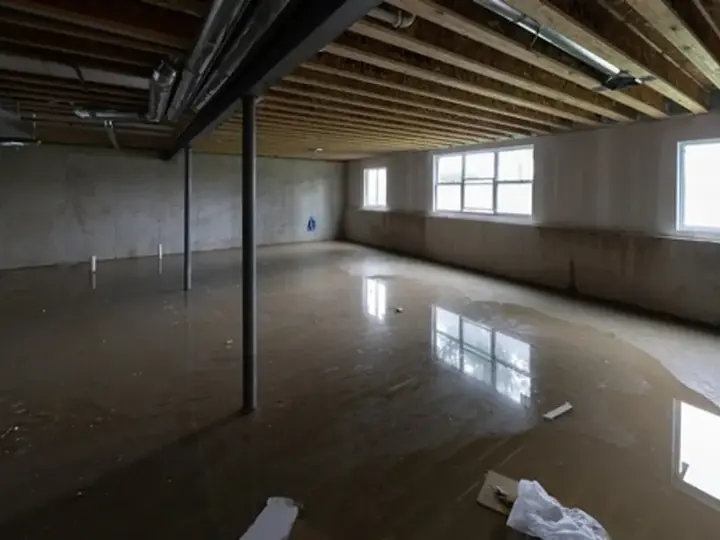
What to do when the basement floods in Sandy
- Stop the water Shut the main or the heater supply, or note where outside water is entering.
- Stay off wet carpet near outlets Basement outlets sit low, so keep clear until power is off.
- Lift what matters Get photos, papers and electronics off the floor and upstairs.
- Photograph the level Wide shots of each room and the water line on the walls help the claim.
How basement flooding cleanup is handled in Sandy, step by step
Mapped before anything moves
The tech who does the walkthrough traces how far the water traveled, including into subfloor, baseboard and wall cavities, so the plan matches what is actually wet.
Dried as a structure
The drying team sizes air movers and LGR dehumidifiers to each room's class of loss, and dries framing and cavities, not just the surfaces you can see.
Documented for the claim
The restoration team keeps a moisture map, daily psychrometric readings and timestamped photos taken before any material comes out.
What does basement flooding cleanup cost in Sandy, UT?
In Sandy, UT, basement flooding cleanup typically runs $2,500 to $12,000. The drivers are the water category, how much of the level is finished, the square footage that got wet and how fast drying started.
One room, clean water
- Extraction and pad removal
- Cavity drying
- Daily readings
Half to full level
- Flood cuts on drywall
- Multiple LGR dehumidifiers
- Baseboard removal
Category 3 basement
- Containment
- Removal of porous materials
- Antimicrobial and drying
For a planning range on your own loss, try the water damage cost calculator. The restoration contractor who responds sets the real scope after the moisture map.
The basement flooding cleanup process in Sandy, UT
- 1
Moisture mapping
The tech who does the walkthrough maps wet materials with pinless meters and a thermal camera before any equipment goes down.
- 2
Extraction
The extraction crew pulls standing water with truck-mounted units, so it leaves the building instead of spreading into the next room.
- 3
Air movers and LGR
Air movers go in at each room's evaporation load while LGR dehumidifiers pull that moisture back out of the air.
- 4
Dry verification
Readings are logged daily, and the drying team pulls equipment only when materials sit within the IICRC S500 drying goal.
Sandy grew fast between 1970 and 1990, and the split-levels and ramblers from that era almost all have full basements with bedrooms, carpet and drywall. When water shows up down there it comes from one of a few places: a split pipe, a failed water heater, a window well that filled, or snowmelt pushing through the foundation. The source changes the category of water, and the category changes what can be saved.
What gets removed and what gets dried
- Carpet pad is almost always pulled, because it holds water like a sponge and costs little to replace
- Carpet itself can often be dried in place after clean-water losses
- Drywall that wicked water is flood cut a set height above the wet line so the cavity can dry
- Insulation in exterior basement walls is checked, since wet batts stay wet
- Anything touched by Category 3 water, like sewage or outside runoff, is removed rather than dried
Drying a below-grade level
Basements dry slower than upper floors. Concrete walls and slabs hold moisture, the air is cool, and there is little airflow. The drying team sizes LGR dehumidifiers to the room volume and the class of loss, runs air movers along the walls, and takes daily readings of framing, drywall and the slab. Equipment comes out when the readings say dry, not when the carpet feels dry.
Water on the basement floor in Sandy? Starting extraction early keeps the drywall and framing savable.
Call about the basement in Sandy, (888) 558-4812Finding the source first
A plumber fixes a pipe or a water heater; a flooded window well or runoff needs grading and drainage work outside. The restoration crew documents the source for the insurance file, because a sudden pipe failure and outside surface water are treated differently. For spring conditions, see National Weather Service Salt Lake City forecasts and the flood insurance basics at FloodSmart.gov. Related pages: window well flooding and snowmelt and runoff flooding.
Water damage help across Sandy and the south valley
The restoration team covers every Sandy ZIP, 84070 and 84090 to 84094, from South Towne to the Bell Canyon trailhead, plus Draper, South Jordan, Midvale and Cottonwood Heights.
See every neighborhood and ZIPRelated water damage services in Sandy
Basement Flooding Cleanup questions in Sandy, UT
Can a finished basement be dried without tearing out the walls?
Often, when the water was clean and extraction started early. Crews may drill small holes low on the wall to push air into the cavity. When drywall has wicked high or the water was dirty, a flood cut is the better choice.
Why does the carpet pad have to go?
Pad soaks up many times its weight in water and takes far longer to dry than carpet. Replacing it is cheaper than trying to dry it and risking odor and mold.
How long does a basement take to dry?
A contained clean-water basement often dries in three to five days. Concrete, cold air and larger wet areas can stretch that. The drying team goes by daily readings.
Is a flooded basement covered by insurance?
Water from a burst pipe or failed water heater is usually a covered sudden loss. Water coming in from outside is usually treated as flood. Coverage depends on your policy, so it is worth checking with your own insurer.
What causes basement flooding in Sandy?
Split pipes in January, failing water heaters, window wells that fill with snowmelt or storm water, and runoff moving down the east bench in spring.
Should I run fans myself while I wait?
A fan can help surface drying, but do not run fans over sewage or runoff water, since that spreads contamination. The first priority is getting the water out.
Basement Flooding Cleanup in Sandy, day or night
Water keeps moving into drywall, pad and framing until someone pulls it out. The Sandy restoration crew extracts, dries to the S500 goal and documents the loss.
- Sandy, UT and the south valley
- Open 24 hours, 7 days