Ice Dam and Roof Leak Damage in Sandy, UT
Heavy snow on east bench roofs builds ice dams that push melt water under the shingles. The drying team dries the attic insulation, ceiling and walls the water reached once the roof is covered.
(888) 558-4812Get ice dam water dried out in Sandy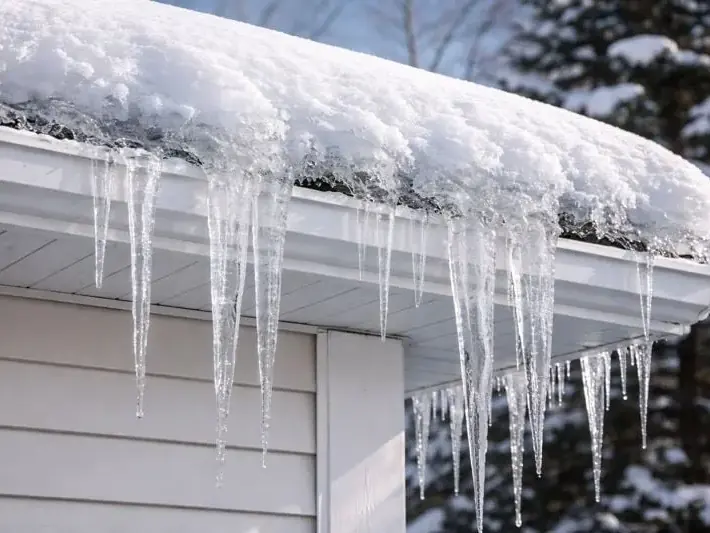
What to do when an ice dam or roof leak drips inside in Sandy
- Catch the water Set buckets and towels under drips and move valuables away.
- Cut power to that room Turn off the breaker if water is near lights or outlets.
- Do not climb an icy roof Leave ice removal to a roofer; chipping ice damages shingles.
- Photograph inside and out Photos of the ice at the eaves and the wet ceiling help the claim.
How ice dam leak drying is handled in Sandy, step by step
Mapped before anything moves
The tech who does the walkthrough traces how far the water traveled, including into subfloor, baseboard and wall cavities, so the plan matches what is actually wet.
Dried as a structure
The drying team sizes air movers and LGR dehumidifiers to each room's class of loss, and dries framing and cavities, not just the surfaces you can see.
Documented for the claim
The restoration team keeps a moisture map, daily psychrometric readings and timestamped photos taken before any material comes out.
What does ice dam and roof leak damage cost in Sandy, UT?
In Sandy, UT, ice dam and roof leak water damage cleanup typically runs $1,200 to $7,000. The drivers are how much attic insulation and ceiling drywall got wet, whether water ran down inside the walls, and how long the leak went unnoticed.
Ceiling stain
- Thermal mapping
- Small ceiling openings
- Cavity drying
Attic and ceiling
- Wet insulation removal
- Ceiling drywall removal
- LGR dehumidifiers
Walls and floor below
- Wall cavity drying
- Floor extraction
- Full documentation
For a planning range on your own loss, try the water damage cost calculator. The restoration contractor who responds sets the real scope after the moisture map.
The ice dam leak drying process in Sandy, UT
- 1
Moisture mapping
The tech who does the walkthrough maps wet materials with pinless meters and a thermal camera before any equipment goes down.
- 2
Extraction
The extraction crew pulls standing water with truck-mounted units, so it leaves the building instead of spreading into the next room.
- 3
Air movers and LGR
Air movers go in at each room's evaporation load while LGR dehumidifiers pull that moisture back out of the air.
- 4
Dry verification
Readings are logged daily, and the drying team pulls equipment only when materials sit within the IICRC S500 drying goal.
Homes on Sandy's east bench, from Alta Canyon to Bell Canyon and Granite, get more snow than the valley floor, and it sits on the roof for weeks. Heat escaping from the living space melts the snow near the ridge, the melt water runs down and refreezes at the cold eaves, and a ridge of ice forms. Water backs up behind that ice, works under the shingles and drips into the attic.
Where ice dam water shows up
- Stains along the top of exterior walls and in ceiling corners
- Wet, matted attic insulation that stays cold and damp
- Peeling paint and swollen trim around upstairs windows
- Water running inside the wall cavity down to the floor below
Drying after an ice dam leak
A roofer handles the ice and the roof, and the leak has to be stopped or tarped before drying makes sense. The tech who does the walkthrough then maps the wet area with a thermal camera from inside, since ice dam water often runs along the top plate and down the wall. The mitigation team removes soaked insulation and ceiling drywall where needed, dries the attic framing and the wall cavities with air movers and LGR dehumidifiers, and keeps daily readings until the materials reach the drying goal.
Water dripping from the ceiling during a thaw? Catch it, turn off power to that room and call.
Call about an ice dam leak in Sandy, (888) 558-4812Cutting down ice dams
The long-term fix is keeping the roof deck cold: more attic insulation, sealed air leaks from the living space into the attic, and good ventilation at the eaves and ridge. Removing snow from the lower few feet of the roof with a roof rake helps during a big storm. Ready.gov winter weather covers winter storm safety and National Weather Service Salt Lake City posts winter storm warnings for the valley and benches. For leaks that come from inside the house, see ceiling leak water damage.
Water damage help across Sandy and the south valley
The restoration team covers every Sandy ZIP, 84070 and 84090 to 84094, from South Towne to the Bell Canyon trailhead, plus Draper, South Jordan, Midvale and Cottonwood Heights.
See every neighborhood and ZIPRelated water damage services in Sandy
Ice Dam and Roof Leak Damage questions in Sandy, UT
Is ice dam water damage covered by insurance?
Interior water damage from ice dams is often covered, while the roof repair and ice removal may be treated separately. Coverage depends on your policy, so it is worth checking with your own insurer.
Why do ice dams form on some Sandy homes and not others?
Heat leaking into the attic melts the roof snow from underneath. Homes with thin attic insulation, air leaks around lights and vents, and heavy east bench snow get them most.
Does wet attic insulation have to be replaced?
Usually. Blown-in and batt insulation that got soaked loses its value and holds moisture against the framing.
Should I chip the ice off myself?
No. Chipping damages shingles and climbing an icy roof is dangerous. A roofer can steam the ice off safely.
How long does drying take after an ice dam leak?
Most attic and ceiling losses dry in three to five days once wet insulation is out and the roof is covered.
Can the wall below a leak be wet even if it looks fine?
Yes. Ice dam water often runs down inside the exterior wall. The thermal camera and meters check the cavity.
Ice Dam and Roof Leak Damage in Sandy, day or night
Water keeps moving into drywall, pad and framing until someone pulls it out. The Sandy restoration crew extracts, dries to the S500 goal and documents the loss.
- Sandy, UT and the south valley
- Open 24 hours, 7 days