Water Extraction and Removal in Sandy, UT
Standing water keeps wicking into pad, drywall and subfloor until it leaves the building. The extraction crew pulls it out with truck-mounted units, then the drying team takes over.
(888) 558-4812Get the water out of the house now in Sandy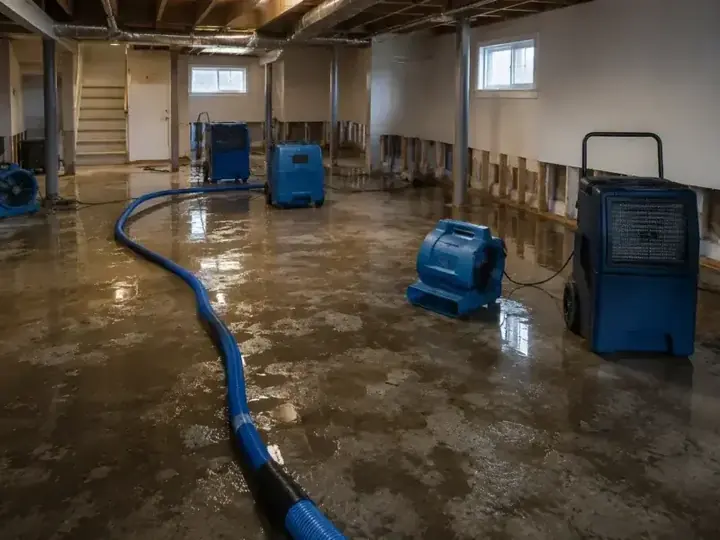
What to do when water is standing on the floor in Sandy
- Stop the source Shut the main valve or the appliance supply, and keep people out of deep water.
- Kill power safely Switch off breakers for wet rooms only if the panel area is dry.
- Move what you can Lift rugs, boxes and electronics off the floor and away from the water.
- Photograph it Take wide photos of every wet room before anything is moved or thrown out.
How water extraction is handled in Sandy, step by step
Mapped before anything moves
The tech who does the walkthrough traces how far the water traveled, including into subfloor, baseboard and wall cavities, so the plan matches what is actually wet.
Dried as a structure
The drying team sizes air movers and LGR dehumidifiers to each room's class of loss, and dries framing and cavities, not just the surfaces you can see.
Documented for the claim
The restoration team keeps a moisture map, daily psychrometric readings and timestamped photos taken before any material comes out.
What does water extraction and removal cost in Sandy, UT?
In Sandy, UT, water extraction with drying typically runs $1,000 to $6,000. The range depends on the water category, the square footage that got wet, whether carpet and pad are involved, and how quickly extraction started.
Single room
- Truck-mounted extraction
- Pad removal if needed
- Air movers for 3 to 5 days
Basement level
- Large-area extraction
- Baseboard and pad removal
- LGR dehumidifiers
Multi-level or Category 2
- Extraction on two floors
- Antimicrobial treatment
- Daily moisture logs
For a planning range on your own loss, try the water damage cost calculator. The restoration contractor who responds sets the real scope after the moisture map.
The water extraction process in Sandy, UT
- 1
Moisture mapping
The tech who does the walkthrough maps wet materials with pinless meters and a thermal camera before any equipment goes down.
- 2
Extraction
The extraction crew pulls standing water with truck-mounted units, so it leaves the building instead of spreading into the next room.
- 3
Air movers and LGR
Air movers go in at each room's evaporation load while LGR dehumidifiers pull that moisture back out of the air.
- 4
Dry verification
Readings are logged daily, and the drying team pulls equipment only when materials sit within the IICRC S500 drying goal.
Extraction is the cheapest part of any water loss, and it decides the size of everything after it. Every gallon the extraction crew removes as liquid is a gallon the air movers and dehumidifiers never have to evaporate. In Sandy that matters most in the finished basements of the 1970s to 1990s split-levels, where water spreads across carpet and pad before anyone sees it.
How standing water gets pulled out
The crew works from the outside of the wet area toward the lowest point:
- Truck-mounted extraction for large areas, so the water leaves the house through a hose instead of in buckets
- Weighted extraction tools on carpet, which press water out of the pad as well as the surface
- Submersible pumps where water stands several inches deep, such as a basement floor drain that backed up
- Portable units for upper floors, stairs and tight rooms
After extraction, the tech who does the walkthrough maps the moisture again. That second map shows what extraction could not reach: wet bottom plates, soaked insulation and the underside of the subfloor.
Carpet, pad and what can be saved
Clean water on carpet can often be extracted and dried in place. Pad soaks up far more water than the carpet above it, so most crews lift the carpet and pull the pad, which is cheap to replace. Gray and black water change the answer: porous materials touched by Category 3 water get removed, not dried. Laminate and vinyl plank trap water underneath and often have to come up so the slab or subfloor can dry.
Water still on the floor in Sandy? Extraction is the step that keeps a one-room loss from becoming a whole level.
Get extraction started, call (888) 558-4812Why speed matters in the first two days
Mold can begin growing on wet organic materials within 24 to 48 hours, according to EPA mold guidance. Fast extraction keeps drywall, pad and framing inside that window. If water came in from outside during a storm or spring runoff, stay out of it until power is off, as Ready.gov flood safety advises. Once the water is out, the job moves to structural drying, and a finished basement often needs the basement flooding cleanup steps as well.
Water damage help across Sandy and the south valley
The restoration team covers every Sandy ZIP, 84070 and 84090 to 84094, from South Towne to the Bell Canyon trailhead, plus Draper, South Jordan, Midvale and Cottonwood Heights.
See every neighborhood and ZIPRelated water damage services in Sandy
Water Extraction and Removal questions in Sandy, UT
How fast should standing water be extracted?
As soon as the source is stopped. Water keeps wicking into drywall and subfloor for as long as it sits, and mold can start on wet materials within 24 to 48 hours.
Can a shop vac do the job?
A shop vac helps with a small spill, but it pulls a fraction of what a truck-mounted unit does and cannot pull water out of carpet pad. On anything larger than a puddle, most of the water stays behind.
Will the carpet have to be replaced?
Clean-water carpet can often be dried in place once the pad is removed. Carpet touched by sewage or outside runoff is Category 3 and gets removed.
What happens after the water is out?
The drying team sets air movers and LGR dehumidifiers, takes readings daily and removes equipment only when materials reach the S500 drying goal.
Does extraction work on hardwood floors?
Yes. Surface water comes off first, then specialty drying mats pull moisture out of the boards. Cupped hardwood often flattens as it dries.
Is emergency water extraction covered by insurance?
Extraction after a sudden discharge, like a burst pipe, is usually part of a covered loss. Coverage depends on your policy, so it is worth checking with your own insurer.
Water Extraction and Removal in Sandy, day or night
Water keeps moving into drywall, pad and framing until someone pulls it out. The Sandy restoration crew extracts, dries to the S500 goal and documents the loss.
- Sandy, UT and the south valley
- Open 24 hours, 7 days